Is Accountability Really Too Much to Ask?

It is, after all OUR money…

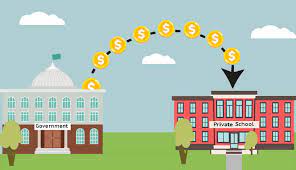
You’ve no doubt seen the stories about parents using voucher money to purchase dune buggies and Oscar Mayer hot dog machines and looking for a curriculum to teach their children the “flat earth theory”. Any reasonable person would realize that Arizona’s voucher program must be made more accountable to safeguard taxpayer dollars and ensure students are taught what they need to know to be productive citizens. 

Reasonability is probably not a word ordinarily associated with the Goldwater Institute though, as is indicated by their recently filed lawsuit against the state of Arizona. As reported by The Arizona Republic, this lawsuit is about “a recent change to the school voucher program that requires parents to tie supplemental materials, including books, pencils and calculators, to a curriculum”. The Goldwater Institute claims “The change has added ‘bureaucratic hoops’ and ‘arbitrary paperwork’ that bog down the reimbursement process”.

The voucher reform was introduced this year after AZ Attorney General Kris Mayes’ office began investigating allegations that the AZ Department of Education had approved illegal expenses under the program. Again, from The Republic,

“State law required textbooks and supplemental materials to relate to a curriculum, according to the Attorney General’s Office, but the official program handbook did not require families to prove such a connection.”

The Goldwater Institute filed the lawsuit on behalf of two Moms, Veila Aguirre and Rosemary McAtee. Aguirre was quoted in a Goldwater Institute news release as saying, “No other teacher in the state has to provide curriculum for purchasing things for their classroom”.

That might be because state standards dictate what must be taught in public school classrooms and district governing boards approve curriculum and textbooks. Teachers also must submit requests for supplemental materials purchase to the district office and governing board members must approve the vouchers detailing all those purchases right down to yes, pencils and erasers.

And I find it really rich that McAtee said, “All of a sudden we have a government telling us, ‘Here’s one more thing for the list’. She misses the point that she is taking taxpayer dollars that the government gives her so maybe they (we) should have the right to ask for accountability for those dollars.

This has been an ongoing theme for voucher parents. At the September State Board of Education meeting, parents claimed the longer delays required by the new rules have led to “missed academic opportunities for their kids”. 

I suspect many of Arizona’s currently 75,000 students now on vouchers are experiencing many “missed academic opportunities”, but not because the state is trying to introduce more accountability into the program. Rather, it is because there are no standards for what should be taught, nor is there any accountability to prove those students learned. And oh by the way, if voucher parents don’t have the time or willingness to prove our money will be well spent, maybe we shouldn’t be giving them our money.

More Budget Cuts are Coming

and one way or another, we will all feel the pain

At our last school board meeting, the superintendent of our small rural district reported that five students left to be homeschooled with vouchers in the past year. It isn’t the first time students have left to attend a charter or private school, but it is the largest number to leave in one year. 

I’ve been closely watching the impact vouchers are having on our state budget and have worried about the lack of accountability and the quality of education these voucher students are receiving. This is the first time though, that it hit home. It isn’t surprising that our students wanting to take advantage of vouchers are going to be homeschooled. The closest private school is about 25 miles away. So, homeschooling or microschooling (a group version of it) is probably the predominant way parents will use vouchers in our neck of the woods.

Mind you, the voucher recipient numbers are still dwarfed by the over 90 % of students who attend public schools (including charters), but they are a fast-growing group and so is the cost of the program. It isn’t just about the actual dollars lost by the districts, however, but also the uncharted nature of it all.

Education Week reported this week that “the proliferation of private school choice programs has injected uncertainty and volatility into the already-chaotic school budgeting process”. According to Ashlee Gabrysch, an analyst who helps analyze school district financial health for credit rating firm Fitch Ratings, “Even the existence of these programs introduces a lot of uncertainty into the K-12 school budgeting or district budgeting process, both for revenue this year and/or revenues next year and beyond”.

It also is incredibly inefficient, because fewer students don’t inherently mean lower costs. Fixed costs (those that do not vary with enrollment levels and that the district has little control over) are typically expenses such as utilities, building operations and maintenance, transportation, and technology. Even instruction is largely a fixed cost since the number of teachers and para pros cannot be reduced because one or two students, (from several grades), leave the school. 

Additionally, because voucher amounts are based on 90% of charter school funding, they are worth more than a district would receive for a typical student. According to the Joint Legislature Budget Committee

  • For large school districts that receive state aid, the per-pupil cost for Grades 1 through 8 in public schools was $700 less than the cost of an ESA.
  • For public high schools, the per-pupil cost was $900 lower than an ESA.

And, the vast number of students who have been taking the vouchers weren’t even in district public schools. They were already being homeschooled or attending private schools at their parent’s expense. Now they attend that private school at taxpayer expense. In addition, a voucher doesn’t ensure equal access for all students since 1) private schools do the “choosing” not the other way around (unlike district schools who must accept all students as long as they have room) and 2) many private schools cost more than the voucher funds. That can be no surprise to anyone who understands how capitalism works.

The real truth is that vouchers are not saving Arizona taxpayers money, as the AZ Daily Star noted,

Most funding for public schools comes from taxpayers who do not have school-age children. When special interests claim that voucher users are “reclaiming their tax dollars,” they ignore the fact that the average household in Arizona is only paying about $3,000 into the state general fund per year via sales and income taxes; only $1,300 (43%) goes to public schools, while vouchers cost at least $7,000 per child.

And yet, as of February 2024, 11 states offered universal vouchers, 12 states had expanded their program, and seven had passed new voucher programs. But Arizona was the first and continues to lead in offering school choice. Unfortunately, Arizona is also the Wild West of school choice, and according to NEA Today, “has one of the least accountable voucher programs in the nation”. Unlike many other states, there is no cap on the amount of vouchers that may be granted and for the 2023-2024 school year, the cost was close to $1 billion. Arizona also doesn’t require any testing or reporting for students on vouchers, whether they are being homeschooled or enrolled in parochial or private schools. Neither does it require any sort of disclosure on how these private schools spend our tax dollars.

Some states are paying attention to the Arizona debacle. In 2023, the Texas State Teachers Association was successful in repeatedly defeating Governor Abbot’s universal proposal. The Idaho Education Association also defeated seven voucher bills in their state legislature and Illinois became the first state to end its voucher program. Just recently, the South Carolina Supreme Court ruled vouchers unconstitutional.

Unfortunately, the AZ GOP-led Legislature is unwilling to do anything to reign in its voucher debacle. State budgets must be balanced each year; they can’t run a deficit like the federal government. When unexpected costs (such as what the runaway voucher program is producing) far exceed what was budgeted, the cuts have to come from somewhere. This year, that meant cuts such as those to colleges and universities, delayed road work and highway construction, and the elimination of funding for water system upgrades. As reported by 12News.com, the final agreement also included, ‘eliminating $37 million annually to K-12 school poverty funding and $24 million annually to the “Promise” low-income college scholarship program.’

The unfunded mandate of universal vouchers is unconscionable and unsustainable and it isn’t just our public schools that are at risk but critical programs across our state. As the Arizona Education Association President, Marisol Garcia warned, “If other states want to follow Arizona, well – be prepared to cut everything that’s in the state budget – health care, housing, safe water, transportation. All of it.” 

The worst part is, that we have no way of knowing what kind of return on our investment we are getting on vouchers for education. We simply do not know whether students on vouchers are learning what they need to know to be productive members of our society. In what universe can that be a good thing?

Dealing with Crazy is Exhausting

and there’s plenty of crazy in Arizona’s voucher program

After watching the Presidential Debate last night, one of my takeaways was that “dealing with crazy is exhausting”. This also describes how I feel about Arizona’s runaway voucher program. It isn’t just the bottomless pit of spending that continues to drain our state coffers and forced cutbacks this year in funding for roads, water, community colleges, universities, and K-12 schools. Even worse, is the fallout from children unprepared for their future and indoctrinated with misinformation and propaganda.

I’ve already written about how voucher parents are using AI to create curriculum that justifies purchases such as Oscar Mayer hot dog machines. And, you’ve no doubt heard about the dune buggy debacle. You know, the one where the parent purchased dune buggies for her kids with voucher funds. The Department of Education initially denied the expense and then approved it. In appealing that decision reported The Arizona Republic, ‘the parent got an occupational therapist to testify that her kids learn better after a trek through the desert, allowing them “to engage in movement before returning to more traditional learning environments.”’ I guess riding a bicycle or going to a playground just wasn’t good enough for this parent. Fortunately, the state Board of Education eventually rejected the parent’s appeal and the state is now trying to claw back the funds originally approved. Of course, parents can still buy $900 Lego sets, kayaks, luxury car driving lessons, and expresso machines.

Now, we see on a Facebook group for Arizona voucher families, a parent asking “Anyone know of a flat earth curriculum”? Others in the group provided interesting responses as you can see below.

Yes, this is real. As the first contributor says, “some people believe in flat earth and some don’t. Ya’ll don’t want to try to discuss how gravity is only a theory. Let this mom teach her kids her way.” Seriously? Are these people stuck in the 3rd century BC? 

When did we become a nation that believes people are not only entitled to their own opinions but their own facts? Maybe about the same time we began to greatly expand Arizona’s voucher program without any guardrails to ensure our children would learn what they needed to be productive citizens.

I decided to try ChatGPT to see what kind of curriculum it would write to support the flat earth theory. It only took about 10 seconds for ChapGPT to write the below. Please note the second sentence that states, 

“The overwhelming scientific evidence supports a spherical Earth, and promoting the Flat Earth theory in an educational setting would be misleading and potentially harmful to students’ understanding of science”. 

Please also note the last paragraph that states “Students should receive accurate, evidenced-based education and develop critical thinking skills”. 

Unfortunately, there are no standards in place in Arizona to ensure students on vouchers receive accurate, evidence-based education”. As stated on SOSAZNetwork.org

Arkansas, Iowa, Indiana, and Florida all require voucher students to either sit for state testing or take a nationally norm-referenced assessment. Utah and West Virginia allow students to submit a portfolio showcasing their academic progress in lieu of an assessment, but crucially still require some form of proof of academic progress. In Arizona, there is zero requirement for voucher students to show they are meeting state standards or even learning at all.

Arizona’s lack of academic oversight is compounded by its failure to approve  voucher-funded private schools, unlike Iowa, Florida, Utah, and West Virginia, which require schools participating in their state voucher programs to register with the state and meet certain standards of accreditation. In Utah, private schools with a potential for financial troubles are explicitly prohibited from joining the program. 

No such vetting exists in Arizona. Any fly-by-night for-profit private school or microschool can open anywhere (even in unsafe garages, living rooms, or strip mall buildings) and accept ESA voucher student funding without any proof of accreditation or quality.” 

The unmitigated malfeasance exercised by Arizona’s GOP in not only supporting but steadfastly pushing forward this unaccountable voucher program is astonishing. From 2011 through 2021, they expanded the program to categories of students they thought they could justify. Then in 2022, they pushed through universal vouchers against the will of the people of Arizona who voted “NO” (by a 2 to 1 margin) to the program in 2018. All this without any real accountability to ensure our tax dollars were well spent and our children were well educated.

The only way to fix this problem is to elect different state legislators in November. The GOP has proven time and again that they have no intention of introducing common-sense accountability measures such as an annual cap on voucher expenditures or a requirement to provide information on student progress to include math and reading test scores, and promotion, graduation, and dropout rates. Why not? The only plausible reason is they don’t want us to know we are not getting our money’s worth with the voucher program…not even close.

This November, help curb the crazy and vote for pro-public education candidates. Learn who those candidates are at Vote 4 Public Ed.

Books in the Library Before Dune Buggies in the Driveway

Public Tax dollars Should Fund Accountable and Transparent Public Schools!


EducationNext.org
, according to SourceWatch.org, “is a propaganda outlet for corporate education reform policies such as charter schools, school vouchers, and merit pay”. That helps explain the “opposing” views below on vouchers for all by Derrell Bradford and Michael J. Petrilli. 

Bradford advocates for vouchers for all (including the rich), because,

“If the rich are not in your coalition, you have a weak coalition. If they don’t benefit from your policy, you have a policy that will be difficult to maintain. It is just that simple.”

This may be somewhat true, but it is also cynical and a sad statement about our democracy and commitment to supporting the common good. Public schools, often the hubs of their communities, are a quintessential common good. Rich people may not send their children to many of these schools, but they too benefit when public schools succeed. When students are prepared to be responsible citizens who not only support themselves but contribute to society, everyone wins.

Bradford though, seeks to denigrate public schools as the choice serving the wealthy’s interests,

‘The public schools have the rich in their coalition, and they pay handsomely for them with a noxious policy concoction that secures their backing. The proposition works like this: “Support us and we will give you a publicly subsidized school, but it won’t be open to the public at large. It will, instead, only be available to you and your neighbors or a small group of students who can afford to pay tuition to attend, if we allow them to enroll. We will draw an attendance boundary around the school to ensure its exclusivity, and we will fine, arrest, or prosecute anyone who violates that boundary by lying about their address or through other trickery. You will also get to thump your chest and describe yourself as a ‘public school parent,’ which may be of great use to you in certain social circles. Finally, in the greatest subsidy available, your housing value will appreciate as a function of this exclusivity. In return, you’ll oppose schools or methods of school finance that would break the link between you, the house, the school, the boundary, and us.”’

Bradford’s assertion is dishonest. Forty-three states had some form of open enrollment policy as of 2023 according to EducationNext. Some of these states, such as Arizona, have policies that require students to be allowed to enroll in any public school in the state. Others, require students to be allowed to enroll in any school in the district of residence. 

He also makes it sound like the public school apparatus” (whatever that is) has diabolically plotted to focus on the wealthy to the detriment of those with less, 

“The well-off are a powerful constituency, and the public school apparatus has offered them an educational and financial package so lucrative that few people could (or do) say no, whether they reside in red states or blue. Thus, in building a “diverse” constituency to ballast themselves politically, the public schools have appealed not in a targeted way to the needy, but broadly and most beneficially to those who need very little. And, to date, this strategy of subsidizing the rich has worked brilliantly for the system.”

Don’t know about you, but when I think of a “diverse constituency” that is ballasting itself politically”, it is the pro-choice crowd, not public schools that comes to mind. Diversity is part of this constituency, but only as a means to an end. The school choice movement is incredibly well-financed and has powerful forces behind it. I believe their primary objective is to reduce the power of the people. And yet, no voucher issue has, thus far, survived the ballot box. That’s not because of some “public school apparatus”, but because voters understand the importance of public schools to our communities and our nation. 

Our founding fathers also understood that importance. They believed an educated populace was key to preserving our democracy and “recognized that educating people for citizenship would be difficult to accomplish without a more systematic approach to schooling”. Early on, schools were funded in a variety of ways and many charged tuition. Then in 1785 and 1787, federal laws trusted large amounts of federal lands to new states entering the union, as long as they agreed to use at least some of the lands for the support of public schools. This strategy helped build stable communities across America and showed the value our founding fathers “placed on education as [a] positive element of nation-building.

Are today’s public schools supported by local tax dollars? Yes, but also by state and federal. The current strategy for funding public schools wasn’t developed by the “public school apparatus”, but rather, by lawmakers who often make choices about education funding not based on the best outcome, but on what will support their reelection. 

How about we commit to properly resourcing our public schools instead of diluting the available funding? What makes more sense? Allowing a family with one child to purchase a piano with a voucher, or a public school purchasing a piano for its music program enjoyed by numerous students? Of course, what voucher recipient wouldn’t appreciate buying dune buggies or an Oscar Mayer hot dog machine on the taxpayer’s dime? Yes, these are real examples of voucher purchases.

And yet, the GOP continues to be all in for unaccountable universal school choice with Arizona serving as the model. This is despite the fact, that the universal voucher program in Arizona ballooned from an estimated $65 million last year to roughly $332 million according to ProPublica. This year, vouchers are expected to cost $429 million. This unbudgeted spending has necessitated cuts to critical water infrastructure projects, highway expansion and repair projects in congested areas, community colleges, and much more.

In a lukewarm rebuttal, Petrilli begins by agreeing with Bradford,

“It’s long past time for schools to be subject to the same competitive forces as other goods and services. And in our huge, diverse society, it makes sense to embrace a pluralistic school system that allows all families to find educational institutions that match their values, hopes, and goals for their children.”

Whoa! Our public schools are not a Big Mac or a drive-thru car wash. They are an investment in the future of our nation. Making them subject to the “same competitive forces as other goods and services” is often not effective nor efficient, especially when the rules of the game are not the same for everyone. Yes, some amount of competition for students can encourage schools to step up their game. But, the lack of accountability and transparency with vouchers, for example, makes it impossible to compare return on investment. 

But he goes on to admit that the savings voucher advocates claim just haven’t panned out, 

“But when the government starts to subsidize students already enrolled in private schools, it incurs a brand-new public expense. Those kids weren’t already attending school with taxpayer assistance. And with about 9 percent of students attending private schools—and those children coming disproportionately from wealthy families—adding them to the public rolls can add up fast. Maybe bringing these families into the school choice coalition has some political benefit—but surely it also exacts a political cost as taxpayers watch millions of dollars flow to prosperous elites who don’t need the money.”

He also disagrees with Bradford about including the wealthy in taxpayer-supported school choice options:

“But in general, state governments don’t spend much on educating the richest children. So it should be with school choice programs.”

Government (public) funds for education, at all levels, should first fund public schools that provide a quality education for all children. If parents with means want to send their children to private schools, that’s their right. It is our right to demand that we know how our tax dollars are spent and the return on investment. Our public schools offer the greatest amount of accountability and transparency and are still the choice for some 80 percent of America’s children. They must though, be resourced to get the job done. Unfortunately, as Save Our Schools Arizona executive director Beth Lewis told ProPublica.org,

“Spending hundreds of millions of dollars on vouchers to help kids who are already going to private school keep going to private school won’t just sink the budget, Lewis said. It’s funding that’s not going to the public schools, keeping them from becoming what they could and should be.”

So…What’s the Real Deal with Vouchers?

Hint: It’s not about improving educational outcomes for disadvantaged children

I was reminded by someone today that back in the 1970s, Arizona public schools were 19th in the nation for funding. Now, they rank 49th. This didn’t occur in a vacuum, nor was it by accident. Rather, it has been, and is, a concerted effort to wrest power from the people by defunding the common good and destroying our sense of community. 

One of the most effective routes to this end is to privatize public education and Arizona has been the pace car. From being the first state to allow charter schools in 1994, to leading the effort to offer dollar-for-dollar tax credits to fund private school scholarships in 1997, Arizona has leaned into the school privatization effort. Although the path hasn’t always been a straight line, (an initial voucher attempt was ruled unconstitutional and the first try at universal expansion was successfully killed by a Save Our Schools AZ ballot initiative), AZ GOP lawmakers finally succeeded in passing universal vouchers in 2022.

Of course, those lawmakers didn’t do it on their own. The American Federation for Children (Betsy DeVos), Americans for Prosperity (Koch Brothers), American Legislative Exchange Council (national conservative bill mill), and the Goldwater Institute were all behind the voucher expansion here in Arizona and elsewhere. According to the Arizona Center for Investigative Reporting (AZCIR), Arizona’s Goldwater Institute has said, “It won’t stop until parents in every state in the nation are empowered to decide what education path truly meets their children’s needs”. 

What, I would ask, about the rest of our needs? These programs, despite proponent’s claims, have not saved taxpayers money. Rather, they’ve diverted and diluted the funding available to our district schools, where 80% of our students are educated. In an analysis of state education spending, Columbia University researchers found from 2008 to 2019, “Arizona was one of the few states where public school spending declined even as enrollment increased. Per-pupil public school spending dropped by 5.7% during that period, according to the analysis, while spending on voucher and tax-credit programs climbed by 270%”. According to the Arizona Department of Education, the total annual ESA awards for students enrolled in Quarter 3 of this year is $735 million this year. And to those who claim that there is a direct cost reduction to public schools when students take a voucher, that is only true if the student was attending a public school when they took the voucher. In FY 2023, only 21% of those taking vouchers were in public schools at the time indicating families are likely using vouchers to subsidize expenses they had formerly covered. As of March 2024, AZ DOE claimed the number has risen to 61.5%. Regardless, when a public school student leaves to take a voucher, there are always fixed costs that the public school can’t reduce when one or a handful of students leave (bus routes, number of teachers required, utility consumption, etc.”). In the meantime, tightened funding hampers our public school leaders in ensuring facilities are well-maintained, and that transportation, technology, and other needs are addressed.

These programs also offer us no real accountability. Private schools aren’t required to participate in state or national testing, nor to publicly report the efficacy of their educational efforts with indicators such as grades and graduation rates. This might have been okay when parents self-funded their children’s private education, but it is not when taxpayers foot the bill. We have a right to know how those tax dollars are spent and whether or not we are getting an adequate return on our investment. Instead, the GOP-led Legislature has resisted any attempts to introduce more accountability into the voucher program. 

Of course, this is all by design. If schools (whether it be private schools, homeschools, micro-schools, or religious schools) accepting vouchers aren’t required to report on academic progress, they can’t be compared to public schools. This allows voucher proponents to make claims that can’t be supported with data. And, the more funding that is cut from our public schools, the harder it is for them to succeed. As Maria Polletta from the Arizona Center for Investigative Reporting writes, “The harder you make it for public schools to succeed, the easier it is to sell the alternatives. And, plenty of well-financed conservative groups are working to do just that”. This leaves us to ask ourselves what’s in it for them.

I’d argue that the desire to maintain and grow their power and wealth is driving privatization proponents. We already have proof that vouchers work better for well-resourced students than lower-income ones. This dynamic, (according to Professor Derek Black who specialized in the intersection of constitutional law and public education), “will continue to exacerbate segregation and create a fragmented educational landscape”. Black goes on to say, “The people who propose these types of things, in my mind, are either highly ignorant of or highly dismissive of a 200-year commitment to public education with the understanding that democracy itself rests upon it.” Or maybe, just maybe, they know exactly what they are doing…

“Happy” Public Schools Week

Today is the last day of #PublicSchoolsWeek so I thought it an appropriate day to take a look at the state of public education in Arizona. Spoiler’s alert…our public schools need more than a week named in their honor.

Fraud in the Voucher Program. Yes, vouchers are alive (if NOT AT ALL well), continuing to rob our state and our public schools of valuable resources. Despite claims that vouchers would help poor children in underperforming schools, about 75 percent of voucher recipients (after the program was initially expanded) had no record of AZ public school attendance. And just this week, Attorney General Kris Mayes announced the indictment of five people on charges of defrauding Arizona’s ESA voucher program of at least $600,000. Three of the fraudsters were former employees of the AZ Department of Education. AG Mayes blamed the Republican-controlled Legislature for never properly overseeing the ESA program. The program expanded from “12,000 children, mostly with special needs, to more than 75,000 students” when the AZ Legislature made eligibility universal in 2022. Originally estimated to cost $64 million for the current fiscal year, budget analysts now say it could top $900 million.Or is it now actually $960M?

Arizona is a Standout in the Network for Public Education’s (NPE) Public Schooling in America Report. Unfortunately, it is for being second to the last in the nation (above only Florida) for public school excellence with only 22.5 of a possible 111 points. The points were divided into four categories. 1. Privatization (is the state committed to democratically governed public schools open to all and are there guardrails on publicly funded alternatives). 2. Homeschooling (are there laws that protect children). 3. Financial support for public schools (are public schools responsibly financed). 4. The freedom to teach and learn (do state laws allow all students to feel safe and thrive at school and for teachers to provide honest instruction to children free of political intrusion.) NPE states that “this year’s report card moves beyond rating states only on charter and voucher policies. It connects the dots between the growing number of “ruthless and brutal” policies designed to disparage, underfund, and ultimately destroy public schools and the privatization goals of the far-right”. The “ruthless and brutal” reference comes from a quote by Christopher Rufo (conservative activist) at the ultra-right Hillsdale College where he told the audience, “To get to universal school choice, you need to operate from a premise of universal public school distrust. He continued by advising the audience to create a narrative around public education that is “ruthless and brutal.” Arizona is doing well at carrying his water, earning an “F” in all categories.

Proposition 123. Of course, the hits just keep on coming as the end of Proposition 123 looms in June of 2025. Prop 123 was approved by voters in 2023 to increase the annual distributions from the state land trust fund from 2.5% of the fund’s average value over five years to 6.9%. If not renewed, the allocation reverts to 2.5% or about $270M, growing as time goes on. The easiest solution says Robert Robb, would be to “refer a clean and simple measure making the existing 6.9% distribution permanent law, distributed as presently on a generally per-pupil basis”. Robb outlines the reasons, however, that this is a huge task given the current political climate. Oh yeah, and did I mention that even if the voters approve a renewal (dated or permanent), Congress must approve the distribution formula because it is embedded in the Enabling Act which made Arizona a state. Need I say more?

Medicare Advantage Plans. What do Medicare Advantage Plans have to do with public education? Not a whole lot except that as Tyna Callahan, a Tucson resident since 1990 wrote in an op-ed in the Arizona Daily Star, “As a taxpayer, I object to the concept of redirecting taxpayer-contributed Medicare funds to for-profit corporations.” Hear, hear Tyna! As a taxpayer, I object to the concept of redirecting taxpayer-contributed public education monies to private schools. Just as Advantage plans are attractive to healthy people and insurance companies, school vouchers (ESAs) are attractive to families self-funding private schools and homeschooling themselves. And, oh, by the way, the private schools are liking the taxpayer dollars they are receiving without any accountability attached. Tyna points out that “by attracting and retaining the healthiest of Medicare recipients, Medicare Advantage plans are drawing Medicare coffers, skimming the low utilizers from the program. Sound familiar?

The Rest of the Story. The AZ Auditor General District Spending report for 2023 is out and according to Howard Fischer of Capitol Media Services, indicates the “overall spending on instruction, on average, is the lowest percentage since the Auditor General’s Office began monitoring in 2004”. Although 53.4% was spent on instruction, that was down 1.1% overall from the prior school year. There are several reported reasons for this decline in instructional spending including districts having purchased large amounts of instructional materials the prior year, the need to hire counselors and instructional coaches, and “having to use more expensive contractors to fill support service needs for special education students”. The loss of more experienced teachers in rural districts also required filling positions with lower-paid staff. I must note though, that Fischer called these experienced teachers “tenured” but that is incorrect. There is no tenure for public school teachers in Arizona since this is an “at-will” employment state. The report also shows that “on average, Arizona teacher pay has seen a 30 percent increase since 2016-17, some of that fueled by federal COVID relief dollars.” That is approximately $5K more than the national average reported by salary.com in January 2024. But, the average can be misleading since “nearly one out of every five teachers has been on the job for three years or less, with an average salary statewide of $47,952”.

No, Arizona’s Teacher Lobby is Not a Union. Just as Arizona public school teachers are not tenured, neither do they have a real teachers’ union. Does the AEA lobby on behalf of public educators, yes. I am sure Billy Robb knows that Arizona is a “right to work” state which means that employees cannot collectively bargain and therefore are not technically a union. But, it fits his narrative better to call the AEA a “union”. And for him to claim that “ordinary teachers had nothing to do with the “Invest in Ed” ballot initiative is just ludicrous. I know plenty of teachers who were part of the effort. He does, however, make some good points about where any teacher lobby in Arizona should focus its efforts. One is to “applaud proposals to boost teacher pay”. I think teachers should be paid more, but I’m glad he makes the point that we need competitive pay for all school employees. Another is to “advocate for deregulation”. He proposes that “any future mandates on public schools should apply equally to private schools receiving vouchers for funding. If this stipulation would put an end to a regulation, what does that tell you about the regulation?” Amen brother! He also says we should “push for standardized testing reform”. Ya’ think? How about we just do away with it altogether?

And yet…our schools continue to deliver. You have to wonder how much more they can take. How many teachers have to be driven out of the profession, how much funding has to be robbed by privatization efforts, and how narrow does the curriculum have to become before our system of public education finally breaks? I don’t know and I sure hope we don’t find out.

The Point of Vouchers

Improving Educational Outcomes is Not the Point of Vouchers. In 2017, I wrote a post on RestoreReason.com titled “Vouchers: Some Common Sense Questions” that supported this fact. I’ve included some of the original post below. My updated comments, now six years later are included in italics below.

Just for a few moments, I’d like to ask you to please forget whether or not you believe school choice and vouchers are the answer to “Make American Education Great Again.” Forget all the hype and promises, just ask yourself which of these scenarios makes more sense?

Accountability and Transparency

Which is more accountable and transparent to parents, the taxpayers, and voters, and therefore less likely to experience less fraud, waste, and abuse? #1 Hint to the answer. #2 Hint to the answer. #3 Hint to the answer.
a. District schools that must report every purchase, competitively bid out purchases over a certain amount, have all purchases scrutinized by a locally elected governing board, undergo an extensive state-run audit each year, and are publicly reported on for performance efficiency and student achievement by the AZ Auditor General’s office each year?
b. A voucher system that puts the onus on recipient parents to submit proof of expenditures to an understaffed AZ Department of Education office responsible for monitoring the $37 million ($99.7 million from 2011 to 2017) in voucher expenditures for 4,102 different students?

Arizona’s ESA voucher program had over 50,000 recipients in March 2023 and is now costing the state over $500 million annually, with less oversight than ever. In fact, Superintendent of Public Instruction Tom Horne bragged earlier this year that his office had approved 22,500 expenditures for reimbursement ($22 million worth), in a single day. And, the State Board of Education recently approved Horne’s new ESA Parent Handbook which actually decreases accountability.

Student Achievement

Which is more likely to be held accountable for student achievement and thereby taxpayer return on investment? Hint to the answer.
a. A district school where students are given a standardized state test with scores rolled up to the state and made public, where data is reported (following federal guidelines for data protection) by subgroups to determine achievement gaps, and where high school graduation and college attendance rates are reported?
b. A private school that does not provide any public visibility to test results and where the state (per law) has no authority to request or require academic progress from voucher recipients or the school?

Horne’s new ESA parent handbook (which previously stated a bachelor’s degree was required) now only requires a high school diploma instead of subject-matter degrees or certification. This move provides parents no guarantee that their child’s teachers have the knowledge or skill to teach core subjects. 

In addition, special education students desiring vouchers were previously required to be evaluated by a public school and receive a plan detailing their specific educational needs. Now, those students can be assessed by a doctor or psychologist, or at a private school. Keep in mind though, that, unlike public schools, private schools can refuse any student they don’t want to accept.

Funding for Public Schools

Which is more likely regarding the portability (with no impact) of per-student funding when students leave their district schools?
a. When a student leaves a district school with their education funding in their backpack, they take all associated expenses with them?
b. That there are fixed costs left behind (approx. 19%) that the school is required to still fund such as teachers and other staff that cannot be eliminated just because a couple of students left a classroom, or a bus route that can’t be done away with just because one student is no longer taking that bus, or a building air conditioner that can’t be turned off because the occupancy in the classrooms is down by three students. What the “drain” causes instead, is larger class sizes, fewer support services, less variety in the curricula, etc.?

The good news (if there is any), is that 75% of the students now taking vouchers, did not attend a public school before they qualified for a voucher. In other words, the vast majority were already attending private schools and therefore did not cause a massive drain of students from public schools. The bad news is that the cost to the state fund for the voucher program is unsustainable and if it doesn’t bankrupt the state, it will reduce funding for public education.

Are Vouchers Helping Disadvantaged Students?

Which is more likely to serve disadvantaged students — the ones most in need of our help? Hint to the answer.
a. A district school, where the vast majority of educational expenses are covered by the taxpayer, where students are transported from their home to school, where free and reduced lunches are provided, and which must accept all comers?
b. A $5,200 voucher to a private or parochial school that has total control over which students they accept, does not provide transportation, and costs an average of $6,000 for elementary schools in 2016-17?

ESA vouchers in Arizona now provide approximately $7,000 per student, regardless of household income. Not surprisingly, the cost of private school tuition has also gone up to an average of $9,576 per year for elementary school and $13,902 for high school. After all, why wouldn’t private school operators raise tuition when the voucher amount increases? 

Obviously, the most disadvantaged students will have a hard time finding their way to private schools considering the $2,500 to $7,000 out-of-pocket expense just for tuition. That doesn’t even take into account the requirement for parents to provide transportation and, the lack of any sort of free or reduced meal program. 

When it comes to transparency, accountability, and equity, district schools outperform private schools. I’d also like to make the unequivocal claim that district schools also (across the board) produce more achievement than private schools, but they don’t report their results so I don’t know that for sure.

Are Vouchers Producing Better Academic Outcomes?

National education expert Diane Ravitch recently reported that “new evaluations of vouchers in Washington, D.C., Indiana, Louisiana, and Ohio show some of the largest test score drops ever seen in the research record–between -0.15 and -0.50 standard deviations of learning loss.” If you aren’t a professional educator, those numbers might not mean much to you. Let’s just say that the learning loss was similar to that experienced during the COVID-19 pandemic and larger than what Hurricane Katrina did to New Orleans academics. 

Ravitch goes on to say that this is happening because “elite private schools with strong academics and large endowments often decline to participate in voucher plans. Instead, the typical voucher school is a financially distressed, sub-prime private provider often jumping at the chance for a tax bailout to stay open a few extra years.”

No matter how much sugar the privatizers try to coat vouchers with, they are still just a vehicle for siphoning tax dollars away from our district community schools to private and parochial (religious) schools with no accountability or transparency. For every person who says “parents have the right to use their child’s education tax dollars as they see fit”, I say, “and taxpayers have the right to know the return on investment for their tax dollars.” The former right in no way “trumps” the latter.

Every Family for Themselves

Peter Greene, a well-recognized education blogger, recently wrote a post on his blog “Curmudgucation”, titled “Vouchers are About Abandoning Public Education, Not Freeing Parents”. He says we should think of vouchers this way,

“The state announces, ‘We are dismantling the public education system. You are on your own. You will have to shop for your child’s education, piece by piece, in a marketplace bound by very little oversight and very few guardrails. In this new education ecosystem, you will have to pay your own way. To take some of the sting out of this, we’ll give you a small pocketful of money to help defray expenses. Good luck.’

It’s not a voucher system. It’s a pay your own way system. It’s a you’re on your own system. The voucher is not the point of the system; it’s simply a small payment to keep you from noticing that you’ve just been cut loose.

Freedom and empowerment will come, as always, in direct proportion to the amount of money you have to spend.”

Greene warns that “the voucher amount will dwindle” as public schools are left with those students who don’t have any other option. “Vouchers,” he says, are “the tail, not the dog. They are the public-facing image of privatization– and not just privatization of the “delivery” of education. Voucherization is also about privatizing the responsibility for educating children, about telling parents that education is their problem, not the community’s.”

Improving educational outcomes is not the point of vouchers. The point, my friends, is to reduce the power of the people, by reducing the size of government and diminishing our voice. The point is to dismantle the public square and the common good, leaving us all to fend for ourselves in a sort of hunger games that only the game masters (the rich and powerful) win. 
Mark Finchem, the master of condescension

As one of LD11 ‘s Representative Mark Finchem’s constituents, I’m thinking he largely penned today’s shared op-ed in the AZ Daily Star titled “Bills see to improve oversight of education vouchers”, and asked Senator Sylvia Allen (AZ Senate Ed Cmte Chair) to give it some credibility by lending her name to it. His attack on the Save Our Schools Arizona folks as “lobbyists” is soooooo “him”. Give me a break. They are grassroots advocates led by a group of moms who were sick and tired of being ignored by school privatization zealots like Finchem. Their movement caught fire over the last couple of years because it was obvious they actually were/are “in this to help our children”.

Contrary to what Finchem would have you believe, they and other public education advocates don’t argue for a lack of choices for parents. In fact, public education advocates and education professionals work hard to ensure our district schools offer an increasingly wide variety of programming to appeal to our diverse student population. This has been one of the good impacts of open enrollment and charter schools which have been providing choice since 1994.

Finchem’s claim that “100 percent of current [Empowerment Scholarship Accounts, or vouchers] ESA students have unique challenges” is purposefully misleading. Education professionals understand that every child has unique challenges and the ideal way to educate them would be to ensure an education program individualized to meet each of their specific needs. Unfortunately, Arizona’s public school funding doesn’t allow that sort of personalized attention as it is still $600 million short of even 2008 levels. Compounding the problem are the 1,693 teacher vacancies and 3,908 individuals not meeting standard teacher requirements as of December 12, 2018. This adds up to a total of 75% of teacher positions vacant or filled by less than fully qualified people, contributing to the highest class sizes in the nation and likely helped push 913 to abandon or resign their positions within the first half of the school year. When quality teachers have proven to be the #1 factor to in-school success, this is not a winning strategy to improving outcomes.

Those requiring the most personal attention, our special needs students, have had access to vouchers since the ESA began in 2011 and made up 58 percent of students on vouchers in 2017. Yet, our district schools still educate the vast majority of these students even though the state’s formula funding for such was $79 million less than what it cost in 2017 to provide the services required under the federal Individuals with Disabilities Education Act. This shortfall requires districts to fund the special ed programs (mandated by state and federal law), from non-special education programs (i.e. mainstream students). And while special education enrollment remains steady at 11.5 percent, the severity of disabilities (more expensive to administer to), have been increasing.

Of course, Finchem is “all about” those students “who have been bullied or assaulted and need ESAs to find a healthier environment in which to learn”. Again, open enrollment and charter schools already provide that option. And maybe, just maybe, if Finchem really wants to help students who have been bullied, he should focus on decreasing class sizes, providing more music and art education, and working to increase the number of counselors at Arizona’s schools? After all, there is nowhere to go but up in this area given our 903:1 ratio which puts us in “first” (worst) place for the number of students per counselor. (The national average was 482:1 in 2018 and the industry recommended ratio 250:1.)

As for his HB2022 providing increased transparency and accountability because it turns over financial administration of ESAs to a private firm, I call total BS. Just look at private schools and private prisons and the amount of transparency they afford the public. The best way to ensure transparency and accountability is to keep public services in the public domain and hold elected officials responsible for ensuring such.

Wait a minute. Maybe I’m on to something. After all, when ESAs were first implemented, Arizona lawmakers were told that the auditing requirements were so weak they were “almost a sham”, but the warnings went unheeded. Not only did the Legislature expand the program almost every year, but “resources to scrutinize the expenditures – made using state-provided debit cards – never kept pace. Yes, some improvements have been made, but an AZ Auditor General audit released in October 2018 found that ”Arizona parents have made fraudulent purchases and misspent more than $700,000 in public money allocated by the state’s school-voucher style program, and state officials have recouped almost none of that money.” Could it be that these lawmakers just don’t want to be held accountable?

Far be it from me to point out that Finchem was first elected in 2014 and is now serving his third term in the Legislature. Why is he only now taking an interest in making the ESA program transparent and accountable? I’d hate to think it has anything to do with the fact that our new Superintendent of Public Instruction is a Democrat who is committed to finally tackling the problem. Upon taking office after all, Superintendent Hoffman immediately launched an audit of the Department of Ed and has now established a bi-partisan task force to look at ESA accountability.

If Finchem really wanted to show our kids how to work together,” he should be working to properly fund ADE’s oversight of the ESA program. Even the former Superintendent of Public Instruction, Diane Douglas (Republican), said “the misspending of the voucher money is the result of decisions by the Republican-controlled Legislature to deny her department money needed to properly administer the program.” Douglas claimed lawmakers resisted properly funding oversight because they wanted a private entity to oversee it.

“If you’re not willing to put the resources into the oversight, then it doesn’t happen appropriately,” Douglas told the Arizona Republic.

Likewise, Republican Senator Bob Worsley said,

“My guess is just that the (Republican) caucus – my caucus – has been, probably, overly enthusiastic about ESAs, and vouchers in general, and therefore anything that would…make it more difficult, it would not be a high priority for them.” He went on to say that it is “neither fiscally sound nor ethical for lawmakers to inadequately fund oversight of the program.”

But, this is exactly what they’ve done. “Under the law, 4 percent of the program’s funding is supposed to go to the department to administer and oversee the program.” In 2018, the Arizona Department of Education (ADE) only received about 2 percent or $1.2 million. Douglas said the full 4 percent was needed to properly oversee the program, but the Legislature had not authorized the department to spend $5.7 million sitting in a fund allocated for program oversight. Let that sink in. Finchem is up in arms about the need to introduce more transparency and accountability into the ESA program, but is part of the GOP-led legislature that hasn’t allowed oversight funds to be spent.

Most galling to me of any of his positions in the op-ed though is Finchem’s admonishment that,

“it’s time for adults to start acting like adults and show our kids how to work together, even if it means working with people with which you may not always agree.”

This also is “him being him” as condescension is a tool Finchem has mastered. I guess when he showed total disdain for teachers (to their faces), during the #RedforEd walkout (and at every opportunity since), he was/is demonstrating how to work with others? I’m not buying it and neither should you. He is a blight on southern Arizona and I hope all those who care about public education, (regardless of where you live), work very, very hard to deny his reelection in 2020.

The House Always Wins

I’m not a gambler, but I do know that Sin City isn’t prospering because those who visit its casinos win more than they lose. Rather, the casinos of Las Vegas and those all around the world, prosper because in the end, the house always wins.

That truism comes to mind when I think about our Arizona Legislature and their non-stop assault on the state’s public education system. Yes, it is sad that on the day Save Our Schools Arizona turned in over 111,000 petition signatures for a voucher expansion veto referendum to our Secretary of State, I’m thinking about how the battle has just begun. Not only that, but I’m worrying the battle is likely to not end in the people’s favor because just like the casinos, the game is rigged against us.

Senator Debbie Lesko, the sponsor of SB 1431, (full expansion of vouchers) is no doubt already planning repeal of the law should the referendum actually qualify for the ballot. Why would she do that? Well, for one, because when Arizonans are given the opportunity to vote on public education, they usually support it. For another, if the repeal of the voucher expansion actually gets on the ballot in November 2018, she and her GOP colleagues know that the issue will bring public education supporting voters out to the polls. We know which party the majority of those voters are likely to come from, right?

Of course, there is no guarantee the referendum will qualify for the ballot in the first place. First, there is the hurdle of actually having 75,321 valid signatures and even what a valid signature is. That’s because in the last legislative session, Arizona lawmakers passed a bill to enforce “strict compliance” for voter initiatives. The AZ GOP Chairman, back in April 2017, admitted that the purpose of the new law was to make it possible for the GOP-controlled Legislature to throw out ballot initiatives for “minor errors regarding language and paperwork.” Just to be clear, those minor errors could be something as trivial as a signer’s “g” or “y” in their name dipping below the line of the box on the petition they are signing. Lawmakers know it is hard enough to collect the required number of signatures; and yet they set out to make it impossible. Organizers believe this law doesn’t yet apply, but others fully expect lawmakers to deny that claim and if so, a court of law will no doubt be the place the issue is resolved.

It is heartbreaking to know all the tremendous effort that went into this effort may be all for naught because our lawmakers are determined to thwart the will of the people. It is also sobering to realize that they will continue to get away with it, until we gain more parity between parties in the Legislature to force solutions that work for all of us. The only thing that will really make a difference is for us to elect more pro-public education candidates to our Legislature. Then, when “the house” wins, our students and their teachers win.

No matter what happens in the end, this petition signature gathering effort is an example of what Margaret Mead was referring to when she said, “Never doubt a small group of concerned citizens can change the world. It is the only thing that ever has.” Started by a few Moms, it blossomed into a statewide effort of grassroots organizing that at the very least, sent a clear message that Arizonans value our public education.

Even though I started out by saying “the house always wins”, I also believe in karma. You know, that concept that in the end, everyone gets what they deserve. I believe pro-public education advocates are on the good side of history and we will win in the long run. Let’s just hope we can recover from the damage done.

So Much for the “Education Governor”

A couple of nights ago, I was talking with a news editor who asked me about the effect of the voucher expansion on homeschoolers. He said when he homeschooled his child, he saw it as his responsibility to bear those costs. He wondered with the new expansion, if homeschoolers would now get taxpayer dollars to teach their child at home. I told him homeschoolers were always eligible for Empowerment Scholarship Accounts (ESAs), or vouchers (I prefer to call them what they really are), but their child needed to be in one of the eligible categories such as: having a disability, from a D or F rated school, living on tribal land, dependents of military, wards of the state, etc. With the latest expansion of eligibility though, all categories of children are eligible for the vouchers. He surmised it wouldn’t take long to reach that cap, given there are some 20,000 homeschooled children in Arizona.

It is difficult to find clear data about the number of homeschoolers but a general estimate is from three to four percent of the school-age population. Given that, we are looking at 30,000 to 40,0000 students in Arizona. Another source I found from 2011 quoted the number at 22,500, so in the interest of being conservative, let’s go with 25,000. To the news editor’s point, if all 25,000 estimated homeschoolers took vouchers, that would deplete Arizona’s general fund by $110 million in taxpayer dollars which are then not available for district education or other critical programs and services. And this new outlay would not be offset by any reduced costs on the part of the state since previously, parents were footing this bill. At three to four percent though, homeschoolers are just a fraction of those who could take the vouchers and run.

Fortunately, there are currently a couple of speed bumps to slow the depletion. The first one is the cap of 5,500 ESAs that may be awarded each per year. Of course, before the Governor even signed the latest expansion bill, Goldwater Institute leadership had already notified their major donors they would get the cap lifted.

The second speed bump is the by-grade phase-in of eligibility. For 2017–2018, the only additional children eligible are those who attend or are eligible to attend public schools in kindergarten (at least four but under seven years of age) or grades one, six, and nine. The following year, the law adds grades two, seven and ten to the mix. The year after than, grades three, eight, and eleven are added. Then in the 2020–2021 school year, all children who currently attend or are eligible to attend a public school in K–12 are eligible to receive a voucher.

If the Goldwater Institute is successful in removing the cap next legislative session though, (or maybe still this session in a “strike everything” bill), the floodgates will be wide open for the grades specified to be added each year. There is after all, a tremendous amount of support for that end as evidenced by Betsy DeVos’ tweet to Governor Ducey congratulating him on the eve of his signing the bill. She wrote, “A big win for students & parents in Arizona tonight with the passage of ed savings accts. I applaud Gov. @DougDucey for putting kids first.” Keep in mind that this is the same Betsy DeVos, that as the head of the American Federation for Children, oversaw an investment of over $750,000 since 2011 into Arizona legislative races for pro-school choice and voucher candidates.

We in Arizona though, know that our Governor hasn’t really put over 80 percent of our kids first. Instead, the self-acclaimed “education governor” has time and again shortchanged our kids. Like with his 2018 spending plan that would provide a 2% pay raise over five years for teachers giving them only about $182 (0.4%) more in the first year. Like with his no-details “plan” to streamline teacher certification requirements to help with the critical teacher shortage, as if less qualified teachers will help our students. Like with his plan to provide $10 million for full-day kindergarten funding at public schools where more than 90% of students are eligible for free or reduced lunch. Unfortunately, for district schools, the entire district must meet the 90% threshold, but for charters, only a single school. In Southern Arizona, only two districts – Nogales Unified and Santa Cruz Valley Unified – qualify. Even Sunnyside Unified School District, at 86 percent of its students on free/reduced lunch, doesn’t qualify. And, like when he negotiated a deal to pay the schools 70% of what they were owed with money that was already theirs and promised that would just be the beginning. As David Safier points out in the Tucson Weekly, the $325 million per year Prop. 123 is bringing in (again, money the schools were already owed, not a plus up), could easily be wiped out by “his latest attack on public education which could drain $150-$300 million” via vouchers.

The most important moral of this story is that elections do have consequences and one of those consequences is now the systemic dismantling of our system of public (district) education. You know, the system that takes all comers, the only system with locally elected governing boards who must operate in a transparent manner and are totally accountable to parents and taxpayers, and, the system which after adjusting for student poverty levels, produces better results.

The only real solution to save our district schools and the one million plus students they provide for, is to elect different lawmakers. To do that, each of us must take personal responsibility to do our part and then some. No longer can any of us leave the work to someone else. Not if we want better for our kids, our communities, and our country. As the Jewish religious leader Hillel originally said sometime around 50 BCE, “If not now, when? If not me, who?”