Senator McGuire Votes Against Public Education

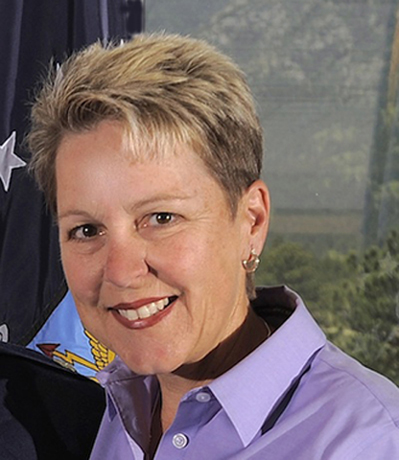
Senator McGuire, AZ LD8, did not prove herself a friend of public education at the end of 51st Legislative Session.

Image

Although the Senate had initially defeated SB1363 [empowerment scholarship accounts (ESAs)], in the final hours of session on June 14, 2013, she alone brought the bill back to life by moving to reconsider the bill.  This “private school voucher expansion bill” then passed the Senate by a vote of 16 ayes – 13 nays.  Senator McGuire was the only Democrat to vote for this bill with the other 12 Democrats in  the Senate and Republican Senator Rich Crandall voting against it for the second time.

As a school board member and locally elected guardian of public education, I am concerned this bill will siphon off even more funding from our public schools.  It further expands the Arizona ESAs Program to kindergarteners and increases the amount available.[i]  Currently ESA funding per pupil is the same regardless of whether a pupil previously attended a school district or charter school.  SB1363 will increase ESA per pupil funding for former charter school pupils by adding charter school “Additional Assistance” to the ESA formula increasing ESA funding to former charter school pupils by approximately $1,600 per pupil (90% of the average “Additional Assistance” amounts defined in A.R.S. § 15-185B3) and increase total ESA costs by an estimated $100,000.[ii]

Both the Arizona Education Association (AEA) and Arizona School Board Association (ASBA) opposed the bill and are appealing a Maricopa District Judge ruling that taxpayer dollars may fund private schools.  This, after the Arizona Supreme Court found in 2009 that two similar school voucher programs violated the Arizona Constitution’s ban on aid for religious or private schools.[iii]

The 2011 law gave parents of special needs children access to public education monies and was further expanded for this school year, essentially doubling eligibility to 200,000.[iv]  Funds can be used for curriculum, testing, private school tuition, tutors, special needs services or therapies, or even seed money for college.  The program however, requires parents to waive their child’s right to a public education…a right that is guaranteed under the state constitution, in order to receive the benefits.[v]

Only 362 students in Arizona had ESAs last year, but 92 percent of ESA funds went to private schools, in many cases for children whose parents could afford the schools without the assistance. For students without special needs, the program provides from $3,000 to $3,500 a year. As this is not nearly sufficient to cover the cost of tuition to a private school (which can be as much as $10,000), the program is unlikely to benefit students from low-income families.[vi]  Last year, this voucher program took $5.2 million from public education funding. With Senator McGuire ensuring passage of SB1363, the amount could potentially increase to over $20 million and public school funding tied to enrollment will likely be reduced.[vii]

Barbara McGuire identifies herself as a “moderate Democrat who promised to work to improve state and local economies, create jobs, improve our kids’ education, address real estate recovery, growth, and quality-of-life issues.”  Her responses to an election questionnaire for State Legislature posted on AZCentral.com also bill her as a supporter of education.  When asked: “how would you change the state’s approach to spending”, she said she would “focus on making Arizona competitive by investing in education.”  When asked, “to name one state agency or program you believe gets too little money and why”, she responded: “Education. Our children are our future. Investment in that future will enable them to be competitive and successful in the global market. Without a good educated work force we risk becoming subservient to other nations.”  Finally, when asked, “would spending more money on public schools increase the quality of education in Arizona, why or why not?” she responded with “Absolutely. It must be spent in ways that create the best outcomes. Such as smaller class size, classroom resources, and dedicated well-paid teachers. Quality education is necessary to build a competitive future workforce.”[viii]

Today I am left feeling as though Senator McGuire threw public education under the bus for political expediency.  She has told me before that sometimes you have to give a little, to get a little.  This however, isn’t giving a little.  It is a fundamental move against public education in our state and against the commitment to public education she originally espoused.  I encourage the voters of LD8 to hold her accountable.

In the Public Interest

As a school board member and locally elected guardian of public education, I am concernedThomas photo med_2 that those who would dismantle it are making headway.  Senate Bill 1363 [empowerment scholarship accounts (ESAs)] currently working its way through the Arizona Legislature will siphon off even more funding from our public schools.  It further expands the Arizona ESAs Program to kindergarteners and increases the amount available.[i]  Both the Arizona Education Association (AEA) and Arizona School Board Association (ASBA) oppose the bill and are appealing a Maricopa District Judge ruling that taxpayer dollars may fund private schools.  This, after the Arizona Supreme Court found in 2009 that two similar school voucher programs violated the Arizona Constitution’s ban on aid for religious or private schools.[ii]


The 2011 law gave parents of special needs children access to public education monies and was further expanded for this school year, essentially doubling eligibility to 200,000.[iii]  Funds can be used for curriculum, testing, private school tuition, tutors, special needs services or therapies, or even seed money for college.  The program however, requires parents to waive their child’s right to a public education…a right that is guaranteed under the state constitution, in order to receive the benefits.[iv]


Only 362 students in Arizona had ESAs last year, but 92 percent of ESA funds went to private schools, in many cases for children whose parents could afford the schools without the assistance. For students without special needs, the program provides from $3,000 to $3,500 a year. As this is not nearly sufficient to cover the cost of tuition to a private school (which can be as much as $10,000), the program is unlikely to benefit students from low-income families.[v]  Last year, this voucher program took $5.2 million from public education funding. If SB1363 is passed, amount could potentially increase to over $20 million and public school funding tied to enrollment will likely be reduced.[vi]


Senator Melvin and Representatives Smith and Kwasman continue their campaign against public education by sponsoring this bill.  Senator Melvin has voted against public education at every turn, and he and his fellow legislators have worked to ensure a lack of accountability and transparency in the law includes assurances that no government agency is empowered to “exercise control or supervision over any nonpublic school or home school.” I’m not sure how any reasonable person thinks this is in the best interest of the public, but then, maybe that’s not their intent.


The right answer, whenever public funding is involved, is more accountability and transparency, not less.  It is why we have school boards elected by the public and it is why those school boards must abide by the Open Meeting Law. While empowerment accounts appear to place choice in the hands of parents, the choice is actually in the hands of private schools, which can pick and choose that they admit.[vii]  Taxpayers have the right to know how their money is being used, and what results it produces.  That is in the public’s best interest.

The AZ Legislature is Busy…How Will Education Fare?

Several bills on education have been introduced recently in the Arizona Legislature.  Some will help support the majority of our students (almost 90% whom are enrolled in traditional public schools.)  Some however, will only serve to support privatization of education in Arizona which will not work to the advantage of most of our students.  The description of these bills has been provided by the Arizona Education Association.  My comments follow in italics.Thomas photo med_2

HB2399 would double school districts’ bonding capacity, which would help some districts out that are able to get voters to approve the bond, but this measure would also increase the economic inequities between school districts. – As many SaddleBrooke residents know, our latest bond issue for the Oracle School District failed in 2011.

HB2425 would disband the ELL Task Force and move its assignment to the Arizona Department of Education.  This task force was originally charged with the creation of the Structured English Immersion (SEI) program to be used in all school districts and with reviewing and approving alternative SEI models submitted by school districts.

HB2530 requires students enrolled in an Empowerment Scholarship Account (ESA) to annually take a norm-referenced achievement test or a college admissions exam. Kudos to Rep. Heather Carter for pushing this bill forward and ensuring there is accountability in this tax-payer funded voucher program.  Unfortunately, another bill (SB1363) expands the ESA voucher program to include students who are eligible for kindergarten. – HB 2530 is supported by the AZ Education Assoc. and the AZ School Board Assoc.  It is absolutely amazing to me that not only do we not have laws that require standards and testing in AZ’s work-around to a voucher program (ESA) and home schooling, but the AZ Legislature and AZ Dept. of Education is prohibited from regulating these programs.  How then do we know the children in these programs are being properly educated?

SB1285 would require the Arizona Department of Education to mail a pamphlet to parents about non-public school options such as private schools and vouchers. The bill would cost $1.5 million annually and proposes to use federal Title 1 funding.  AEA President Andrew F. Morrill told the Arizona Republic, “The bill appears to be a marketing ploy to use public funds to increase the customer base for private schools. This is unnecessary and probably would run into some legal challenges down the road.”  The bill is ALEC’s signature legislation this year.  It was held in Senate Education committee last week and is on the agendas for the Education and Appropriations committees this week.

SB1385 would make private charter school teachers’ evaluations so they could not be released under a public records request. – How can this be in anyone’s best interest except for those who profit from the charter school’s operation?

SB1450 seeks $5 million from the general fund for Arizona’s Alternative Teacher Development Program to be awarded to a qualifying service provider, i.e. Teach for America. – Both Diane Ravitch, former U.S. Assistant Secretary of Education and an education policy analyst and Linda Darling-Hammond, Professor of Education at Stanford University, have criticized Teach for America (TFA) for sending inexperienced young people to teach the nation’s most vulnerable children.  In fact, a study in Arizona in 2002 held that TFA teachers had a negative impact on their students as compared to certified teachers.  Another study Darling-Hammond led with 4,400 teachers and 132,000 students concluded certified teachers consistently produced significantly higher achievement than those uncertified and TSA teacher had a negative or nonsignificant effect. 


Don’t Believe the Pundits, Traditional Public Education Works

Thomas photo med_2Proponents of school choice say traditional public schools are failing our children and choice is the answer.  But, open enrollment has offered school choice in Arizona since 1994 and Arizona has more charter schools than any state in the nation. Yet, Arizona is still 46th in the U.S. in education performance.  The problem isn’t parents don’t have choices.  The problem is our legislature is not focusing resources to serve the majority of our students – traditional public education.  Instead, they play a shell game to give the illusion of responsible legislation regarding education.

Take our state program of education tax credits.  The Individual Tax Credit program favors private schools with two tax credits allowed for donations to school tuition organizations for private schools totaling a maximum of $2,062 (for married filing jointly in 2013) versus $400 for traditional public schools.  The Corporate Income Tax Credit is another private school boon allowing Arizona corporations to take a dollar-for-dollar credit for donations to School Tuition Organizations (STOs), which give scholarships to private schools.

Arizona also has Empowerment Scholarship Accounts (ESAs).  Originally created for parents of disabled children, as of 2013-2014, the option will extend to:  students attending a school with a D-F letter grade, children of active duty military, and wards of the juvenile court.  ESAs allow parents to withdraw their children from public schools and receive a portion of their public funding deposited into an education savings account administered by the Arizona Department of Education and the State Treasurer. 

These special programs redistribute state revenue and help hide the truth that Arizona leads the nation in per public spending cuts since 2008 ($3 billion).  Although proponents say school choice saves the state money, this is true only if students who started out in public schools, end up in private schools.  Unfortunately, many tuition scholarships funded by the tax credits have gone to students who would have attended private schools anyway, representing a financial loss for the state.

But don’t charter schools perform better?  Yes, Tucson’s Basis High School was ranked 6th in the U.S. in 2012 by U.S. News and World report.  But, University High School of Tucson Unified School District, was ranked even higher at 4th in the U.S.  In fact, six of the top 10 high schools in Arizona and the top five high schools in the nation are traditional public schools.  There are pockets of excellence in both charter schools and traditional public schools, but by and large, they have no significant performance advantage over traditional public schools.

Charter schools and private schools serve a purpose.  But, they are not designed to serve the needs for the majority of our children.  Traditional public schools are the parental choice for almost nine out of 10 families in Arizona and these schools continue to serve these children well, despite a lack of adequate funding and support.  Just imagine what our schools could be if our efforts were properly focused and funded?